2021 Himalayan Snowcock Expedition Tour Recap
Posted: January 21, 2022
July 30 - August 1, 2021 - From Salt Lake City, Utah
In 2021, we offered a standalone
Himalayan Snowcock Tour for the first time in addition to our regularly scheduled
Most Wanted Tours. It just so happened that when we setup a tour with Georgia Audubon for the week before, that most of their group wanted to continue and join our Snowcock Expedition. A few others opted to join the tour as well, so Taylor stayed on to help guide and drive our 2nd van—and just like that we were off to Nevada.
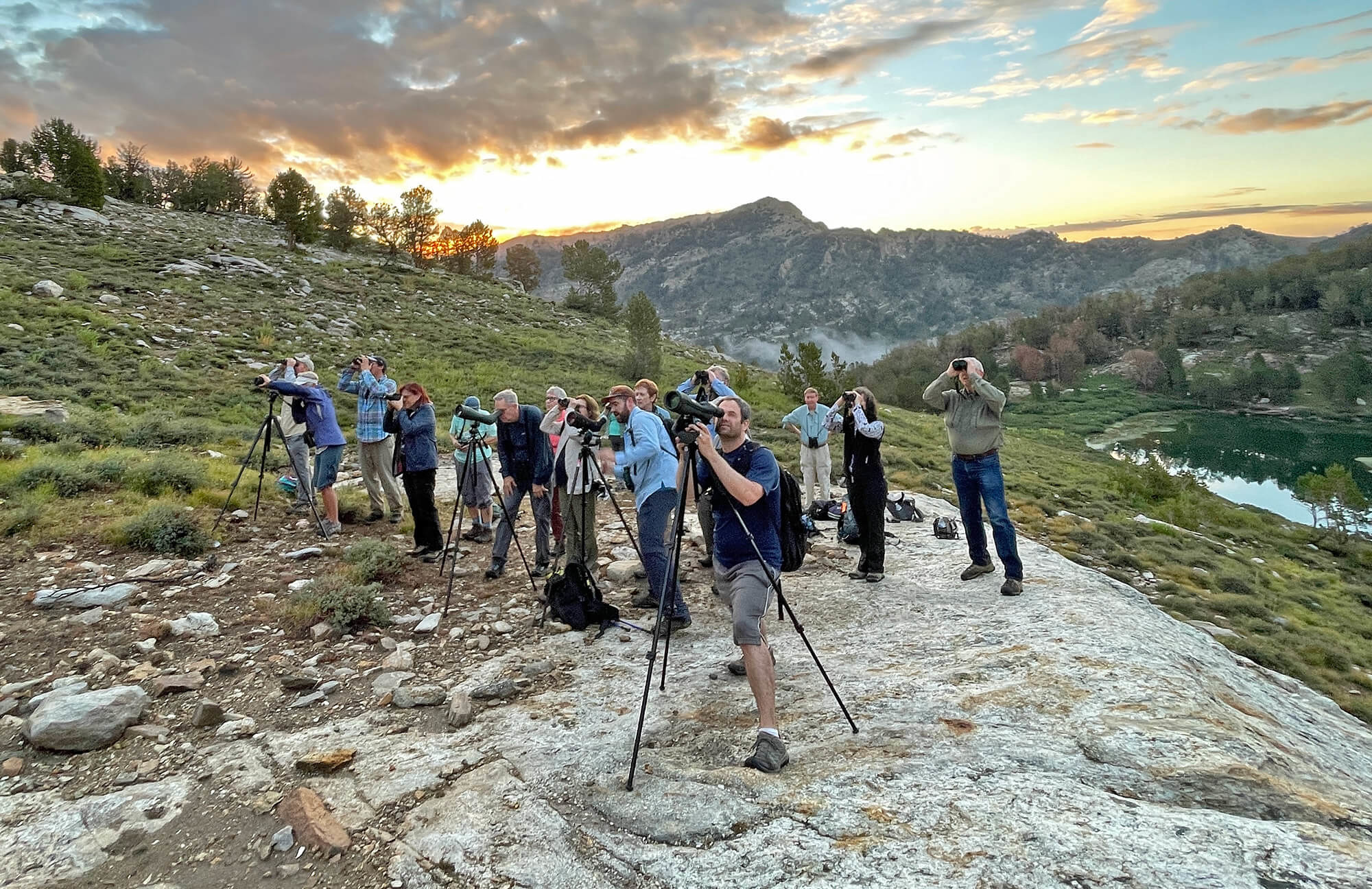
Our Group checking out the
Himalayan Snowcock
As always, a quick stop at the Bonneville Salt Flats was a nice way to break up the drive. By late afternoon we arrived in Elko, checked in to our hotel, and grabbed dinner. Then it started to rain. This was a first in all my tours here—an outright downpour as we went to bed. I’m not sure how long it rained during the night, but luckily it had stopped by the time we departed the hotel before 3:00 AM.
We made our way to the Lamoille Canyon and it was apparent there had been some big rain here earlier in the week. In several places large slicks of mud were still on the road, while 10’ piles of debris and mud had been plowed off the road surface. I’m sure fires in recent years haven’t helped the canyon, and clearly there had been a bit of a mess. At the parking area everything was soaked—it was obvious that it had rained most of the night and I was slightly nervous about the trail condition. But, much to my surprise the trail was fine. As we ascended, I spotted another car coming up canyon—it was my buddy Chris Brown and his Wildside Tours group. There would be a lot of birders out and about today!
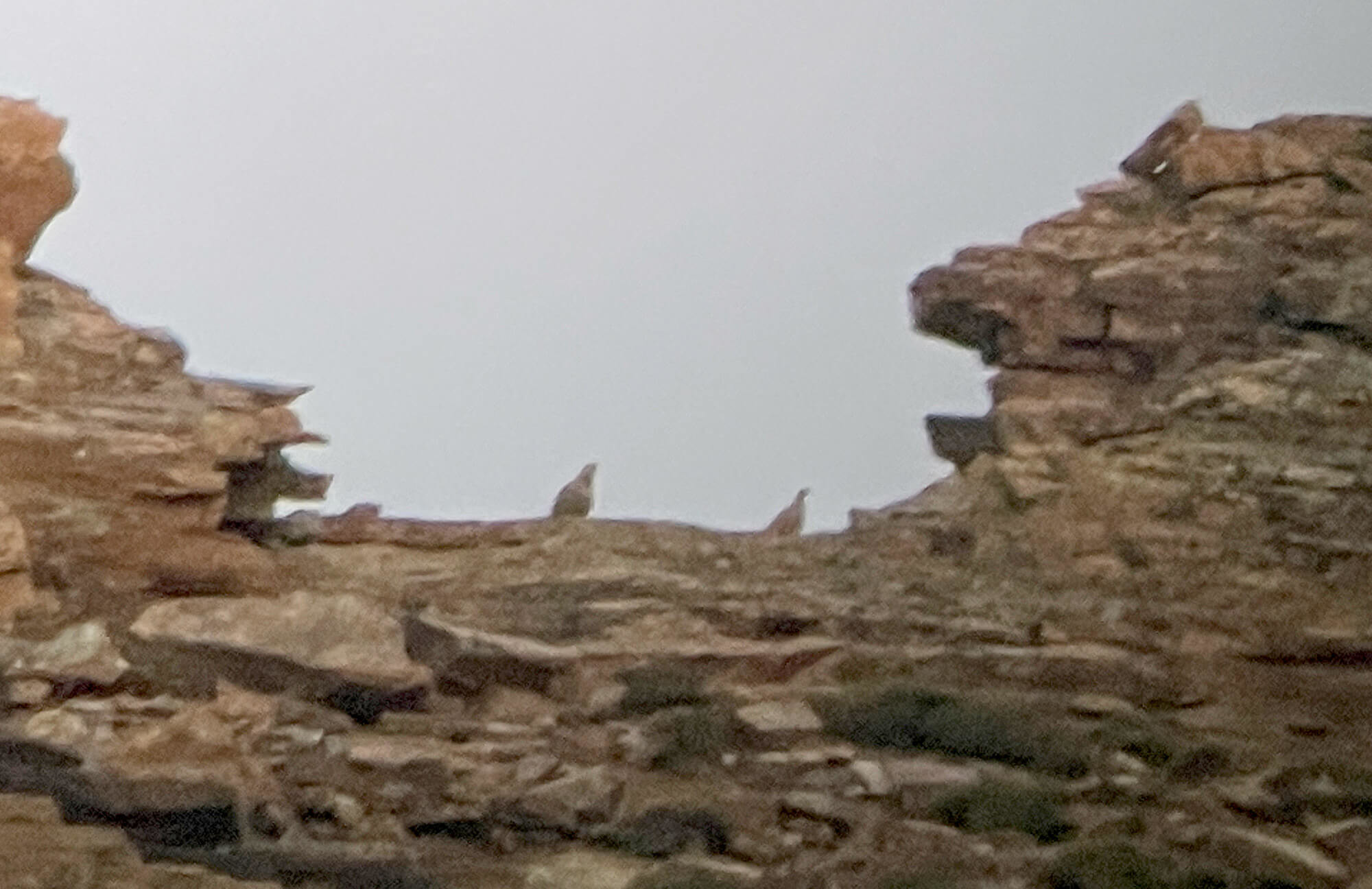 Himalayan Snowcock
 on a distant ridge
Despite our large group we spread out and slowly made our way to the “slab”. As we got out our scopes and started scanning as it became light, I spotted a single
Himalayan Snowcock sitting in the same notch in the rocks as my tour 2 weeks earlier. I quickly got those with me on the bird, and motioned for the rest of the group to hurry as we had the bird.

Snowcock Success
Fairly soon, everyone had seen it, as well as another bird that emerged shortly after. We made sure to keep a close eye on the birds as they made their way across the ridge line. Pretty soon the Wildside group arrive and we motioned them over to join us since we had the birds. In no time at all around 20 birders were on the slab enjoying lifer
Himalayan Snowcock views.
 Island Lake
 at Sunrise
On top of seeing the main target for the tour, the skies had mostly cleared and it was a beautiful morning in the Ruby’s.
After spending several hours on the slab we decided it was time to head back to town. On the way out, a
Prairie Falcon flew over and landed in a dead snag across the tiny valley from us. Meandering down the trail we were treated to a trio of my favorite mammals here:
Yellow-bellied Marmot,
Golden-mantled Ground Squirrel, and the always a crowd pleaser
American Pika.
 Yellow-bellied Marmot
 lounging on a boulder
 American Pika
 keeping a watchful eye on us
 Golden-mantled Ground Squirrel
 having a nibble
On our way out of Lamoille Canyon we made a quick stop to pick up
Lewis’s Woodpecker for the tour, then headed back to Elko. The plan was lunch to go from my favorite spot in town—unfortunately there had been some miscommunication between the owner and her staff and at the last minute they told us they couldn’t handle our large group as planned. It was disappointing, but luckily another local dive saved the day and was able to seat our larger group immediately. Big props to
Odeh's Mediterranean Restaurant where I’ve eaten several times before. Aside form the gracious staff at this family-owned business, the food is fantastic!
While large birding groups can often cause logistical issues, the pandemic really showed how many local restaurants struggled to maintain normal hours, with short staffs, and lots of people trying to get out and make up for the year lost. Prior to 2021 we had never run into any issues with restaurants, but it was apparent the toll for the pandemic was taking on small businesses!
While we typically try to get out for some birding in the evening—due to the logistical issues at lunch we wanted to make sure we had a smooth dinner so we skipped birding, had a great dinner at
Luciano’s and that was the day!

Digiscoped
Lark Sparrow
Overnight it rained again—and continued into the morning. Luckily for us but the time we reached our morning birding destination at South Fork the rain had subsided in the valley—but we could see it continued over the Ruby’s. South Fork was its usual, incredible, hotspot. We tallied a whopping 64 species here as we spent the morning canvassing the entire lake and surroundings.
 Wilson's Snipe
 with Long-billed Dowitchers
Loads of waterfowl, waterbirds, and shorebirds made for a lot of scoping.
Clark’s Grebe and
Western Grebe,
American Avocet,
Wilson’s Phalarope,
Red-necked Phalarope,
Semipalmated Plover, and
Lesser Yellowlegs were some of the highlights.

Digiscoped
Sora
Near the campground on the west side of the lake we had
3 Sora feeding in the open in a nearly dried up canal—great looks as the birds didn’t seem to mind the crowd gawking. Eventually we wrapped things up and headed back towards Elko, making a stop in a juniper patcher near town. While there weren’t any out of the ordinary birds, we did pick up a few things like
Western Tanager and
Bullock’s Oriole, in addition to
Northern Mockingbird and
Blue-gray Gnatcatcher.
Back in town we managed to get everyone packed and were finally able to grab that delicious lunch we expected the day before. We dined at the city park and then hit the road back towards Utah. A quick stop just over the border and we added
Snowy Plover for the tour, before continuing back to Salt Lake City and dropping everyone off at the airport or nearby hotels.
A huge thanks to Taylor, and Adam from Georgia Audubon, for co-leading this tour. The more guides the merrier, and with 3 sets of eyes on the lookout we definitely picked up a few more birds than usual! Upon arriving back in Utah I received a DM asking about the mudslides in Lamoille Canyon. I quipped that it wasn’t a big deal, they had cleared the road and we were good. Then the message included a
link to a news article. On Sunday, the day after our tour more than a dozen mudslides caused massive damage to the road. The canyon was closed and they had to help get people out of the canyon. The road stayed closed for more than a month while they cleared debris, and made sure the road was safe to use.
Because of this, my last 2 tours to Elko for the summer were cancelled! A friend of mine on the mountain that Sunday said the following to me in a message, “Island Lake was scary with the rain and hail”… They had gotten off the mountain before the landslides and had no idea what had transpired. The good news is that the canyon is once again open to the public, and we should be good to go for 2022! This was the first time we had ever encountered sketchy weather in all my tours to Nevada and isn't expected normally.
Photos from this Tour:
Georgia Audubon Photos from this Tour:
Birds Seen on this Tour:
Labels: Himalyan Snowcock, Nevada, tours

2021 Georgia Audubon Custom Tour Recap
Posted: January 17, 2022
July 25-30, 2021 - From Salt Lake City, Utah
Way back in June 2019 (what seems like a lifetime ago), Adam Betuel reached out about planning a tour with him for the summer of 2021. At the time Adam was running his own company called Teal Birding to lead tours primarily for Georgia Audubon. Over the course of our planning, Georgia Audubon hired Adam full-time, and in the end, we worked to plan a Georgia Audubon Mountain West Hotspots and Highlights Tour for this past July. Like the rest of my tours this summer, we banked heavily on vaccine availability and decreasing covid-19 cases to determine if we would be able to go.
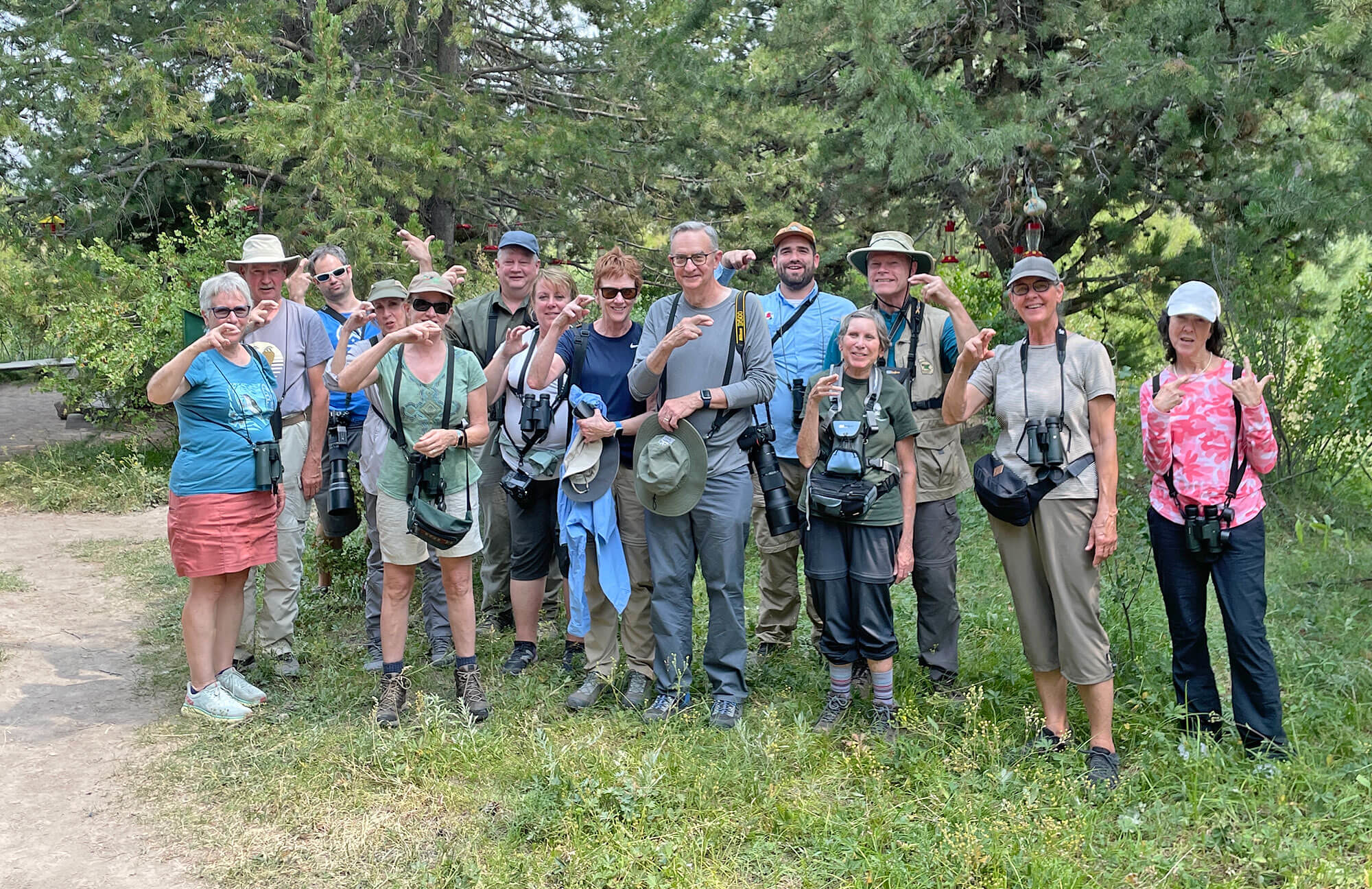 Georgia Audubon
 doing their best "crossbill" impression!
In our planning, we opted to go with a larger group to keep the cost lower, add an additional night to cover more areas and offer my Snowcock Expedition as an extension after the main tour. With this in mind, I reached out to see if Taylor Abbott was available to help lead and drive our second vehicle. With the big logistical questions answered, we set the itinerary and Adam got to work selling the tour! In the end, we sold out all 13 available spaces and waited to see how the summer went.
All 3 guides and all 13 participants were fully vaccinated at least 2 weeks before the tour began, and cases remained steadily low through the summer. On July 25th we picked up the last of the participants to arrive and kicked off our tour! We had one cancellation the week before the tour, so the group stood at 12 + the 3 guides.
 Western Tanager
 hanging around our picnic area
As became the routine this summer we headed to Millcreek Canyon to show off our over-summering flock of
9 Tundra Swan that were calling the pond at Log Haven home. Continuing up the canyon we encountered a noticeably quieter habitat than usual. The summer heat and early spring had really exacerbated the speed to the end of the breeding season. Nonetheless, we tracked down several
Western Tanager, a few
Warbling Vireo, and flyovers of both
Sharp-shinned Hawk and
Cooper’s Hawk.

Catered BBQ dinner from
Table 22 by Chef Parks
Changing things up ever so slightly, I reached out to
Table 22 by Chef Parks to see if they would be interested in catering a simple BBQ picnic for us in the canyon. We reserved a picnic site, and
Table 22 delivered and set up our dinner in the great outdoors. The BBQ chicken and sausages were fantastic, and the relaxed atmosphere made for a nice meal. Definitely
check them out!

Last-minute
Black Swift spotted by Adam
After dinner, we headed south. With reports of
Black Swift in Salt Lake county dwindling we took our chances at Bridal Veil Falls in Utah County, about an hour away. Luck wasn’t in our favor during our vigil, but as we returned to the vans to head owling, Adam spotted one flying right over the parking lot. The bird made several passes and even in the fading light, the looks were great!
 Flammulated Owl
 shot by Adam Betuel, Georgia Audubon
We ended up at an owling site I hadn’t yet checked this year. Knowing we would have a large group and have limited access to locations for 2 vans and so many people I kept a few spots just in case. We waited as the light faded and talked about the owls, why they were here, and how we would hopefully find one. Within 19 minutes of starting everyone had several looks at least one but possibly
2 Flammulated Owl, all from less than 20’ of where we parked.

Super cute and cooperative
Juniper Titmouse
In the lead-up to our tour, we adjusted the itinerary to slow down a little based on
our tour with Lake-Cook Audubon in June. Instead of our usual morning in the desert, we departed immediately for Idaho, crossing the border around 8:00 AM. At the Juniper Rest Area, we nabbed
Ash-throated Flycatcher,
Woodhouse’s Scrub-Jay,
Juniper Titmouse, and
Bewick’s Wren.
 Broad-tailed Hummingbird
 at its nest
We continued towards the South Hills, arriving at Diamondfield Jack Campground just before 11:00 am. We spent several hours here with a picnic lunch and birding. We found a
Broad-tailed Hummingbird nest right where we were eating lunch. The usual
Mountain Chickadee,
Hammond’s Flycatcher, and
Brown Creeper were all present.

Poor digiscoped
Cassia Crossbill
While those are all nice birds, they were not our main targets, and we eventually got great looks at the star of the show--the
Cassia Crossbill.
We made our way across the hills towards Brockman’s, stopping in the burn to pick up
Lewis’s Woodpecker. Several birds put on a show moving about in the treetops. Continuing we drove the windy dirt road passing through a patch of aspen when a
Northern Goshawk swooped down through the trees along the road, and right over the first van. Adam and I both yelled out GOSHAWK!!! But only 4-5 people saw the bird as it disappeared into the forest.

Migrant
Rufous Hummingbird at Brockman's
At Brockman’s, the feeding frenzy was in full effect. Loads of
Broad-tailed Hummingbird,
Black-chinned Hummingbird, and migrant
Rufous Hummingbird kept everyone busy and entertained. In the week since my previous visit, ALL of the male
Calliope Hummingbirds had either already left on their migration or were avoiding the large number of birds. In the end, we picked out several young and female Calliope’s.

1 of 17
Swainson's Hawks from this afternoon
We also picked up a calling
Gray Catbird here, but in the afternoon heat, most of the birds were taking a break! Once everyone had their fill of hummingbirds we headed back towards the lowlands. In the sage flats on the west end of the hills, we picked up
Grasshopper Sparrow,
Vesper Sparrow, and
Savannah Sparrow. Once we reached Magic Valley we spent some time birding in the agricultural areas south of Twin Falls where we had
17 Swainson’s Hawks, including a very cooperative young bird perched on a fence post by the road.

The uncooperative
Gray Partridge continued for another tour!
On Tuesday morning, we headed back into the fields to see if we could get back on top of our summer partridge issues. As luck would have it, more eyes helped find the birds. Both Adam and Taylor spotted small coveys of
Gray Partridge working their way through the sagebrush. The looks weren’t fantastic, but it was the main target!
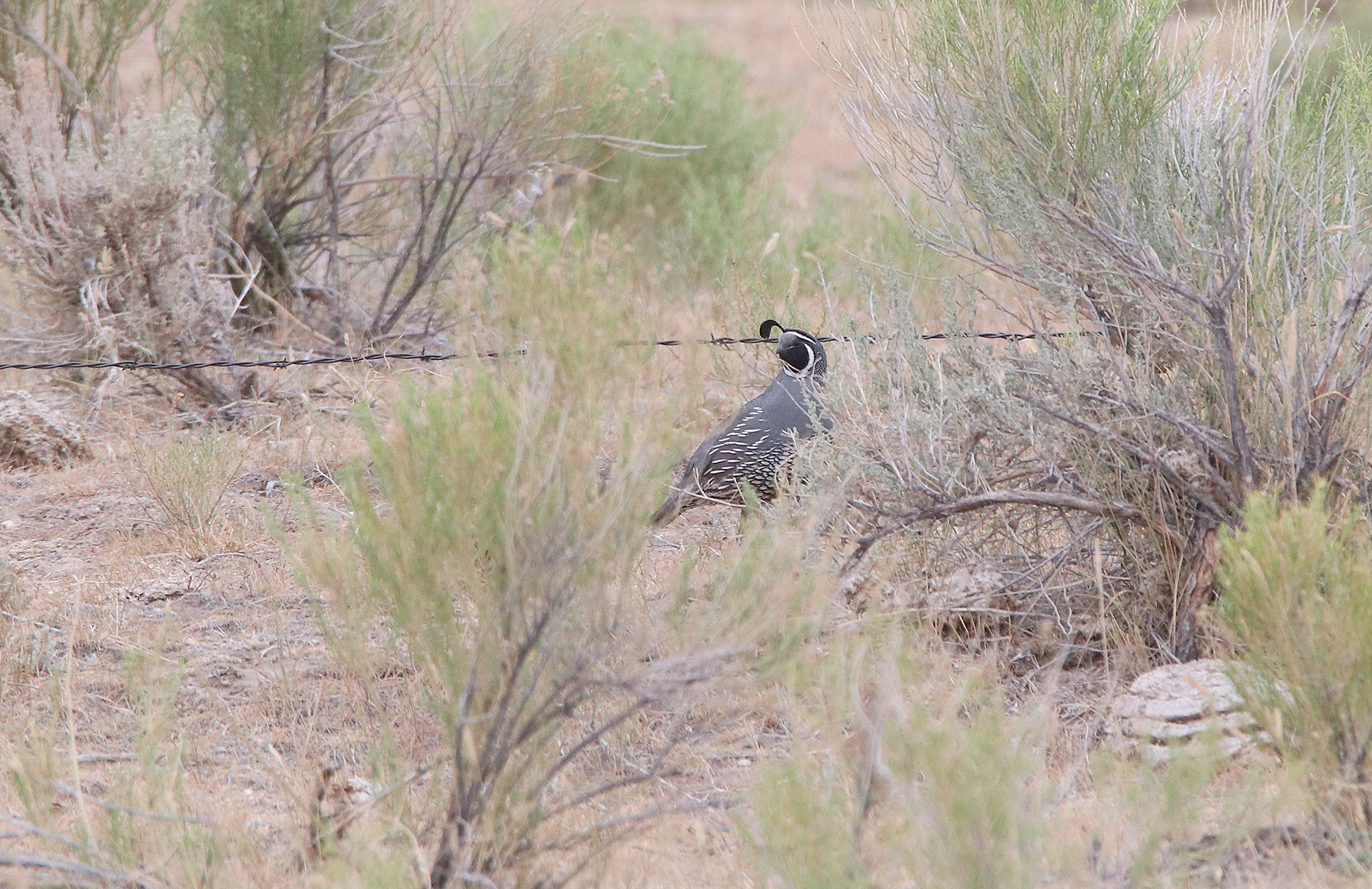 California Quail
 "hiding" in the sagebrush
We also picked up
California Quail along with the usual
Barn Owl and
Northern Harrier. We missed Burrowing Owl but picked up a consolation
Prairie Falcon. Overall, the birding was really good this morning and we had other fun desert birds like
Sage Thrasher,
Loggerhead Shrike, and
Horned Lark to entertain!
We also had an interesting interaction with a local who we could tell was watching us. As we were headed out of the field I stopped to scan some hay bales when the truck pulled up and the woman driving began to ask what we were doing and why we were there. Replying that we were just bird watchers, she didn’t appear moved as she went on to tell us that their farm had been “robbed” several times in the past week, and the side road we had been pulled over on was private property. Remaining calm and slightly amused, I told her that we weren’t robbers, and I was up here several days every summer and had parked in that spot many times since there were no trespassing signs. She continued that if I just looked on my GPS I could see it was private--at which point I just had to laugh. She clearly didn’t like us being there, and despite the fact that we were in 2 giant white vans, walking around looking at birds, we must have fit the idea of what “robbers” look like and act in her mind. It never ceases to amaze me the extremes of the locals you meet in how they react to birders--we are after all a very innocuous group!
 Canyon Wren
 at Shoshone Falls
Anyways, we checked out of our hotel and visited Shoshone Falls where the birding was again pretty good for the late date in July. We added another
California Quail, worked hard for a
Yellow-breasted Chat,
Rock Wren, and
Canyon Wren, and mostly just enjoyed being out and birding. Lots of common birds filled in the time between the target species.
 Phalarope
 streaming past after sunset
Our afternoon plans fell apart due to our time birding in Idaho. We ended up leaving late and running out of time to visit Bear River MBR. Instead, we opted to check in to the hotel and take a short break during the 100-degree afternoon, before visiting Antelope Island State Park for sunset and shorebird migration--neither of which disappointed! Roughly
25,000 Red-necked Phalarope and perhaps
5,000 Wilson’s Phalarope delighted the group.

Utah's state bird—the
California Gull
We also picked up a bevy of other species including
3 Snowy Plover,
3 Marbled Godwit,
1,000’s of American Avocet, and several hundred
Black-necked Stilts. Hundreds of
Franklin’s Gulls also passed by while we watched the phalarope show. We made a quick loop of the island just before dark hoping to maybe come across a Chukar--instead, we found
5 Northern Mockingbirds.
 Sunrise
 over the Great Salt Lake
On Wednesday morning, we were back at the island before sunrise headed to look for
Chukar again. This time, however, luck was on our side and we found a small flock of 5 before the sun had even hit. We also saw several
Rock Wren,
6 Burrowing Owl, and a
Sage Thrasher to kickoff the morning
We again focused on the causeway on our way off the island--most of the same birds as the previous day. We did get good looks at
Willet and
Long-billed Curlew and spent some more time enjoying the phalarope migration.
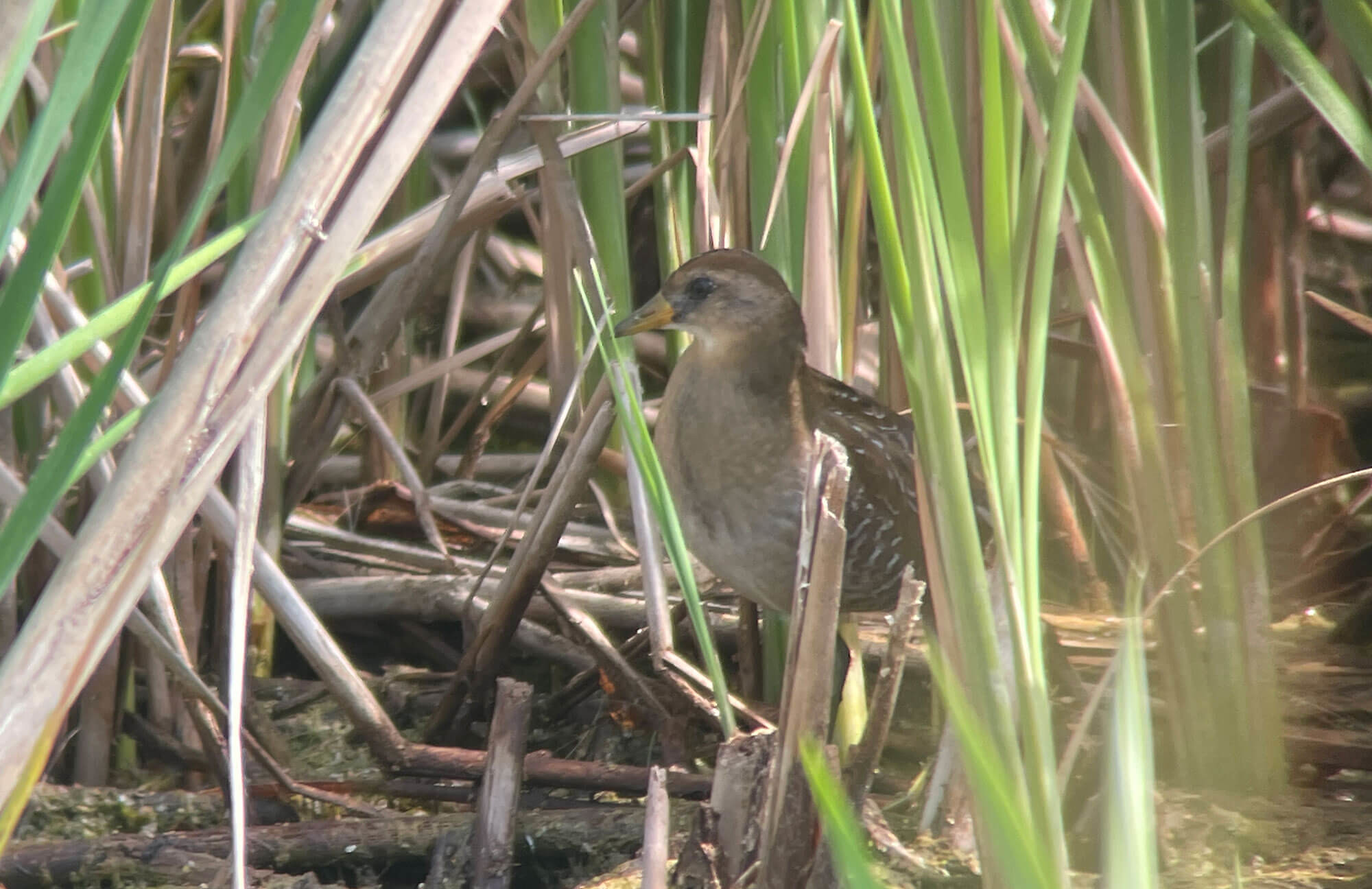
Digiscoped
Sora hiding in the reeds
Visiting Farmington Bay WMA we focused on marsh birds for the remainder of the morning. Highlights were both
Clark’s Grebe and
Western Grebe as well as both
Sora and
Virginia Rail. Waterfowl was dismal, with just
Redhead in addition to the common park species. We added both
Greater Yellowlegs and
Lesser Yellowlegs, in addition to the new normal
Neotropic Cormorant flock that was present all summer.
 Georgia Audubon
 enjoying some cooler temps
After an afternoon break, we ventured up to 8,000’ and a 40-degree swing in temperatures as a pleasant rainstorm drenched us in the mountains. The birding was pretty slow due to the rain and we missed most of what we would expect to find. We did have
Lincoln’s Sparrow,
Red-naped Sapsucker, and
5 Steller’s Jays to keep us busy. But in all honesty, the wet and cool weather was a perfect end to the afternoon!
 Western Screech-Owl
 providing killer looks
By the evening the storms had mostly passed. We decided to try for
Western Screech-Owl and had a rough go of it for the first 30 minutes. The howling wind looked like it was going to squash our efforts, but eventually, a cooperative bird landed almost on top of the group and posed nicely for everyone to see. In the end, we were back to the hotel and done for the night by 10:00 pm!
 Tiger Moth
 at the Gas Station
Thursday morning the plan was to get into the mountains and enjoy some cooler temps. We started off on Jeremy Ranch Road in Summit County and quickly picked up most of our expected targets.
Willow Flycatcher,
Lazuli Bunting,
Yellow Warbler, and
Gray Catbird were all cooperative. A flyover
Bald Eagle was a bonus.
At a quick stop for gas, several people noticed these Tiger Moths on the window of the gas station. It’s always fun to take a few minutes and look at the unexpected.

Male
Bobolink on his way out of breeding plumage
Heading east we visited a mountain valley and agricultural area where the products of a successful breeding season were on full display. While the
25 Bobolink were definitely the star of the show,
49 Sandhill Crane and
20 Savannah Sparrow were equally impressive counts. Despite our best efforts, we missed snipe this morning!
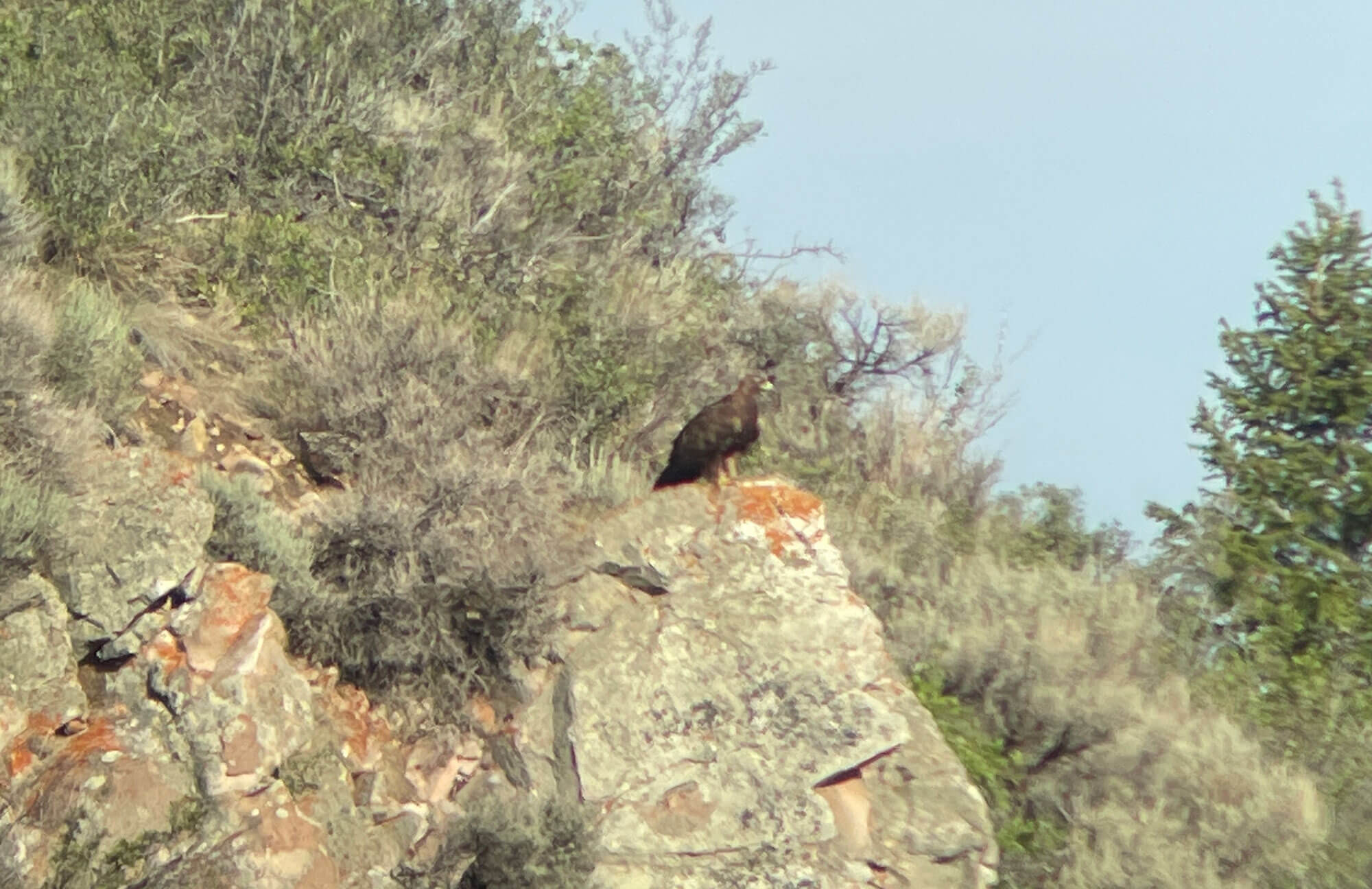
Digiscoped
Golden Eagle near Kamas
Making our way higher we were treated to a pair of
Golden Eagles along the road. Both birds spent time flying over and perched on the nearby cliffs.
As we reached one of our favorite mid-elevation riparian sites the effects of the summer were apparent with bird diversity and density really low. With some effort, we found
Hammond’s Flycatcher, but the rest of the expected breeding specialties were nowhere to be found. While disappointing, the scenery did provide some consolation.

The bonus crossbill, a
White-winged Crossbill in Utah
We proceeded to almost 10,000 feet and set out to find a rarity that had been reported the previous week. After a short search, we located, got great looks at, and recordings of
White-winged Crossbill. While this species isn't normally expected on our summer tours, it was a nice addition. And for about half the group a pair of
Red Crossbills made for a clean sweep of the Lower 48 Crossbills!

Our last ditch effort for
American Dipper paid off!
The game plan this afternoon was similar to the previous day--we took an afternoon break then set out to do some birding before dinner. We happened upon an
Osprey at a rather unexpected spot. And after nearly 40 minutes of searching, we finally found an
American Dipper for the week. This bird eluded us at all our other usual spots and the search today was a last-ditch effort.
 Prairie Falcon
 on a distant power pole
We wrapped up the day with a little birding near our hotel adding
Lesser Goldfinch for the week, before having a great dinner to cap off our last night in Salt Lake City. On Friday morning we set out to pick up the Sage and Juniper specialists we still needed for the week. It had poured overnight making the road quite sloppy and not ideal for the vans. We focused on finding
Gray Vireo and
Gray Flycatcher which were the 2 main targets. We did miss a couple of expected sparrows, but the safety of the tour takes precedent to the birds! We had a migrant
Warbling Vireo here which was an early surprise, but the weather must have put a few things on the move! A bonus
Prairie Falcon was a nice pick up on teh way back towareds Salt Lake City.
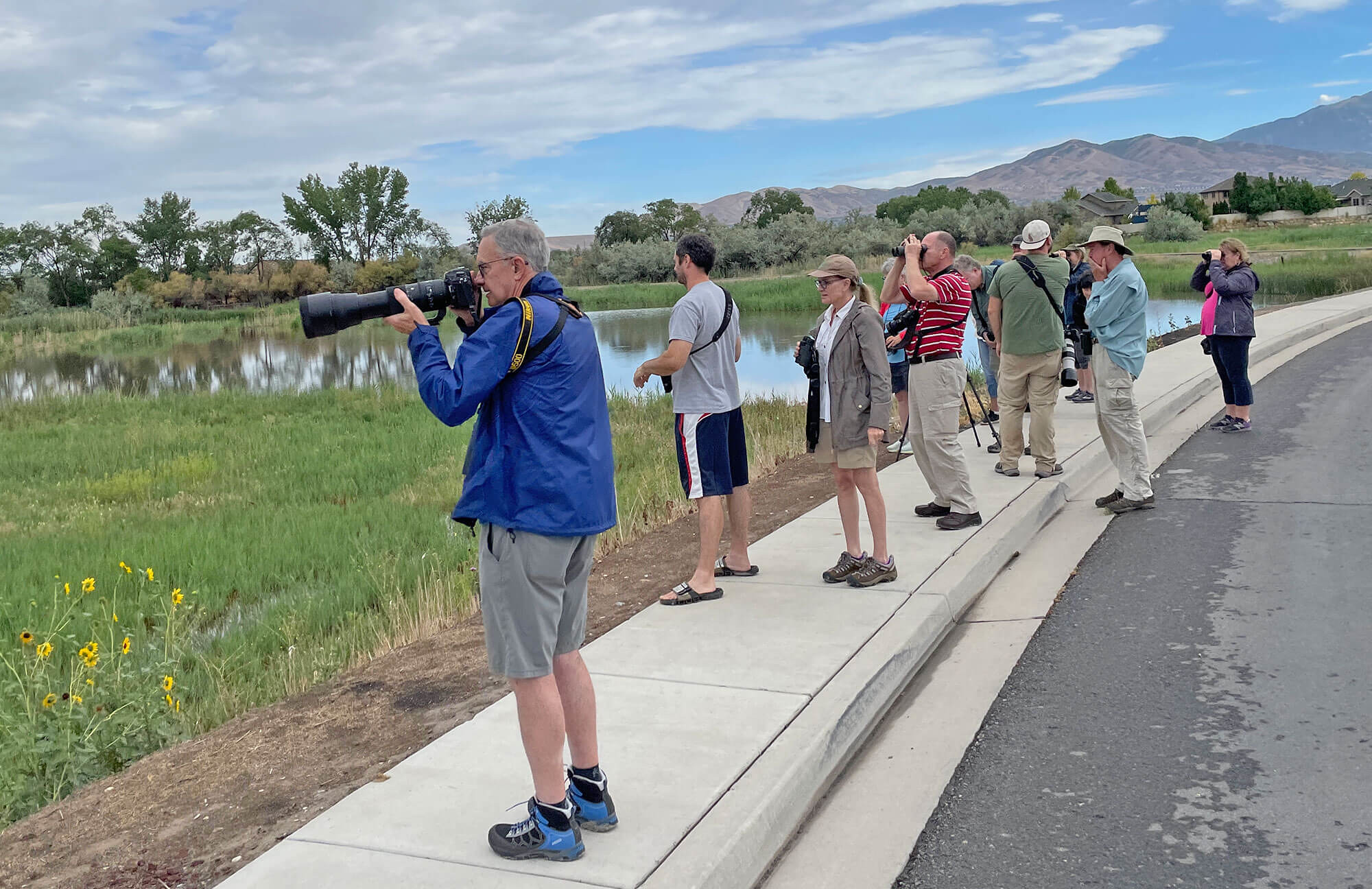 Georgia Audubon
 checking out some waterbirds
Having a few hours to burn with our expected route blocked, we called an audible and visited a small local lake where we hadn’t brought a tour in years! It ended up being a great decision that added several birds for the tour. The highlights included a trio of migrant sandpipers:
Least Sandpiper,
Spotted Sandpiper, and an uncommon
Solitary Sandpiper.
We also had great looks at a number of marsh birds like
Snowy Egret,
Caspian Tern, and
Yellow-headed Blackbird. After running out of birds we started making our way back to Salt Lake to wrap up our regular portion of the tour with a fantastic lunch at Red Iguana. From here we lost several members of our Georgia Audubon group, and added a few of my clients for our Himalayan Snowcock Expedition, which you will be able to read about next week when I release that trip recap!
A huge thank you goes out to Adam Betuel and Georgia Audubon for a thoroughly enjoyable week birding in the Mountain West. And of course, none of this would have been possible without Taylor stepping in to guide and drive our second vehicle! Three guides certainly made for picking out a number of birds we likely would have missed! All in all, it was a great week of birding in Utah and Idaho!
Pitta Tours Photos from this Tour:
Georgia Audubon Photos from this Tour:
Birds Seen on this Tour:
Labels: Black Swift, Calliope Hummingbird, Cassia Crossbill, Chukar, custom tour, Flammulated Owl, Gray Partridge, Gray Vireo, Idaho, Lewis's Woodpecker, tours, utah
July 2021 Idaho Custom Tour Recap
Posted: September 26, 2021
July 8-10, 2021 - From Salt Lake City, Utah
It’s always a thrill when a client reaches out with a small and specific target list, that also is a bit of an adventure. As was the case with John and Ellie who reached out in 2019 and planned a tour with me last summer. Of course, Covid put the brakes on that, so we rescheduled to this summer to try again. This tour was focused on just 2 species—Cassia Crossbill and Cassin’s Vireo. The remaining 2 breeding ABA (not including Hawaii) species my client needed. I knew the crossbill would be a piece of cake, even if we had to spend a little time searching. The vireo however had been a little nervous. I had only been to the area one time, years ago, and got them without issue, but I had never been in mid-July, and there was very little sighting data for that time of year…
We kicked things off bright and early in Salt Lake City on Thursday, July 8, picking ups John and Ellie for our 3.5-hour drive to the South Hills in Idaho. Taking a queue from my previous tour, we stopped at Magic Mountain Ski Area and didn’t quite have the same experience as 2-weeks prior. We did get a
Red Crossbill, but not the expected endemic. After the short vigil here, we headed to my tried and true location near Diamondfield Jack Campground. We spent the next hour enjoying various species, including
Western Tanager,
Hermit Thrush,
Hammond’s Flycatcher, and of course, the star of the show—
Cassia Crossbill.
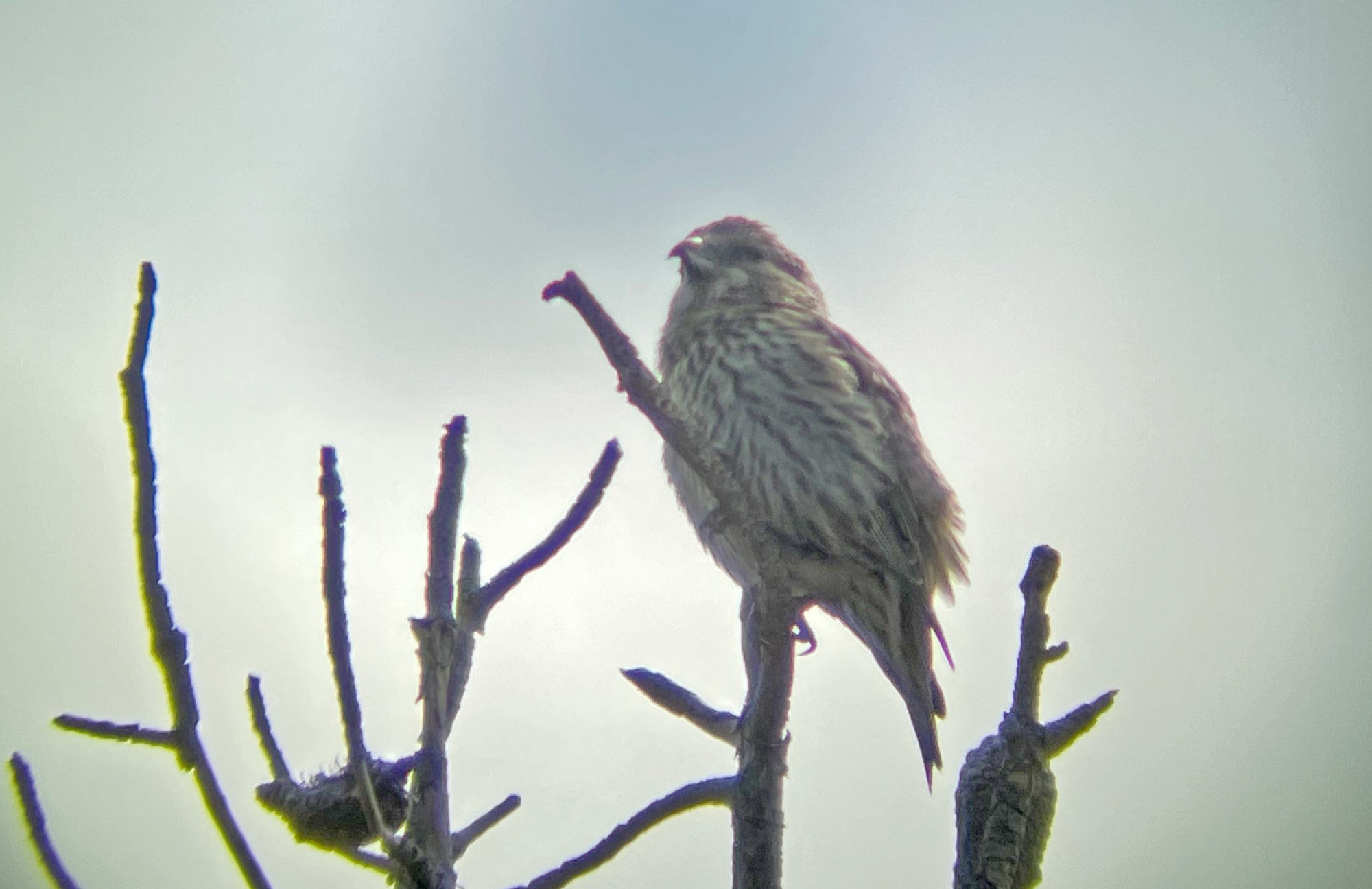
Digiscoped
Cassia Crossbill in the Soth Hills
 John
John getting ABA lifer Cassia Crossbill
After the crossbill, the rest of the day was a breeze. We had a picnic lunch at Porcupine Springs, before spending a little more time at Magic Mountain. En route to Brockman’s, we had
4 Lewis’s Woodpeckers at the burn trail, on what was a warm and considerably quiet afternoon. At the feeding station, the usual buzz of
Black-chinned Hummingbird and
Broad-tailed Hummingbird was highlighted by 3 male
Calliope Hummingbirds that put on a nice display.
 Calliope Hummingbird
 striking a pose
We wrapped up the day with a short afternoon break and dinner before calling it a night. On Friday we started the morning out in the fields south of town. This morning was one of our
Gray Partridge success stories for the summer when a flock of 14 birds scurried across the road in from of us then flushed showing off those gorgeous rufous tails as they came to land in the tall grass in a nearby field!
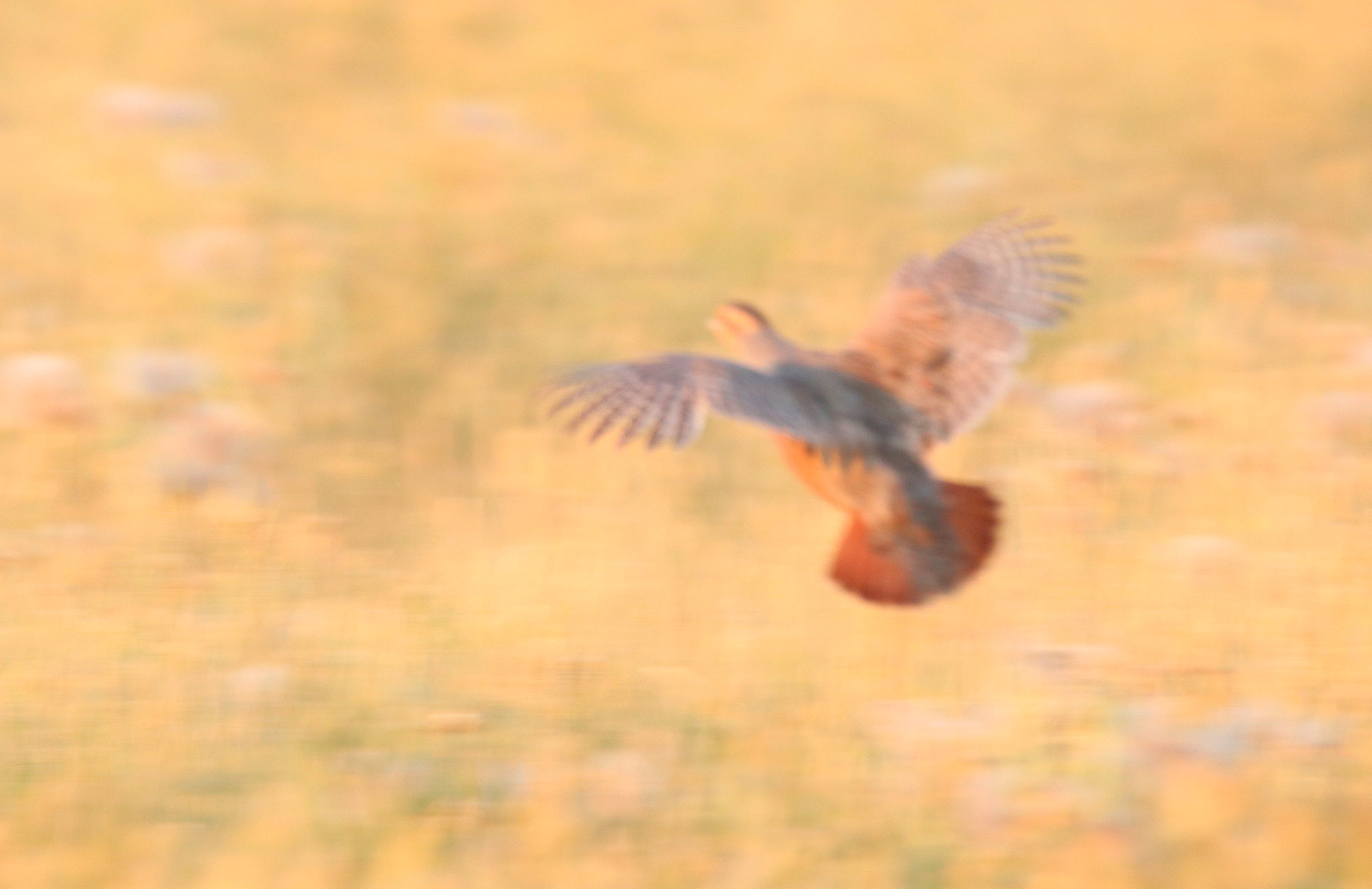
Not my best shot of a
Gray Partridge
We also had our usual bevy of
Barn Owl,
Burrowing Owl,
Swainson’s Hawk, and
Northern Harrier to keep things interesting. No visit to Twin Falls is complete without a stop at Shoshone Falls Park, so we made the most out of the morning and birded the area thoroughly. Both
Rock Wren and
Canyon Wren were quite cooperative, while numerous
Yellow-breasted Chat and
Bullock’s Oriole punctuated a very different visit than my previous tour here.

A stunning
Yellow Warbler
The birding was phenomenal this morning and wrapped up our time in Twin Falls nicely. And even though not all the birds are specialties, even the common stuff like
Rock Pigeon can be really stunning given their surroundings!
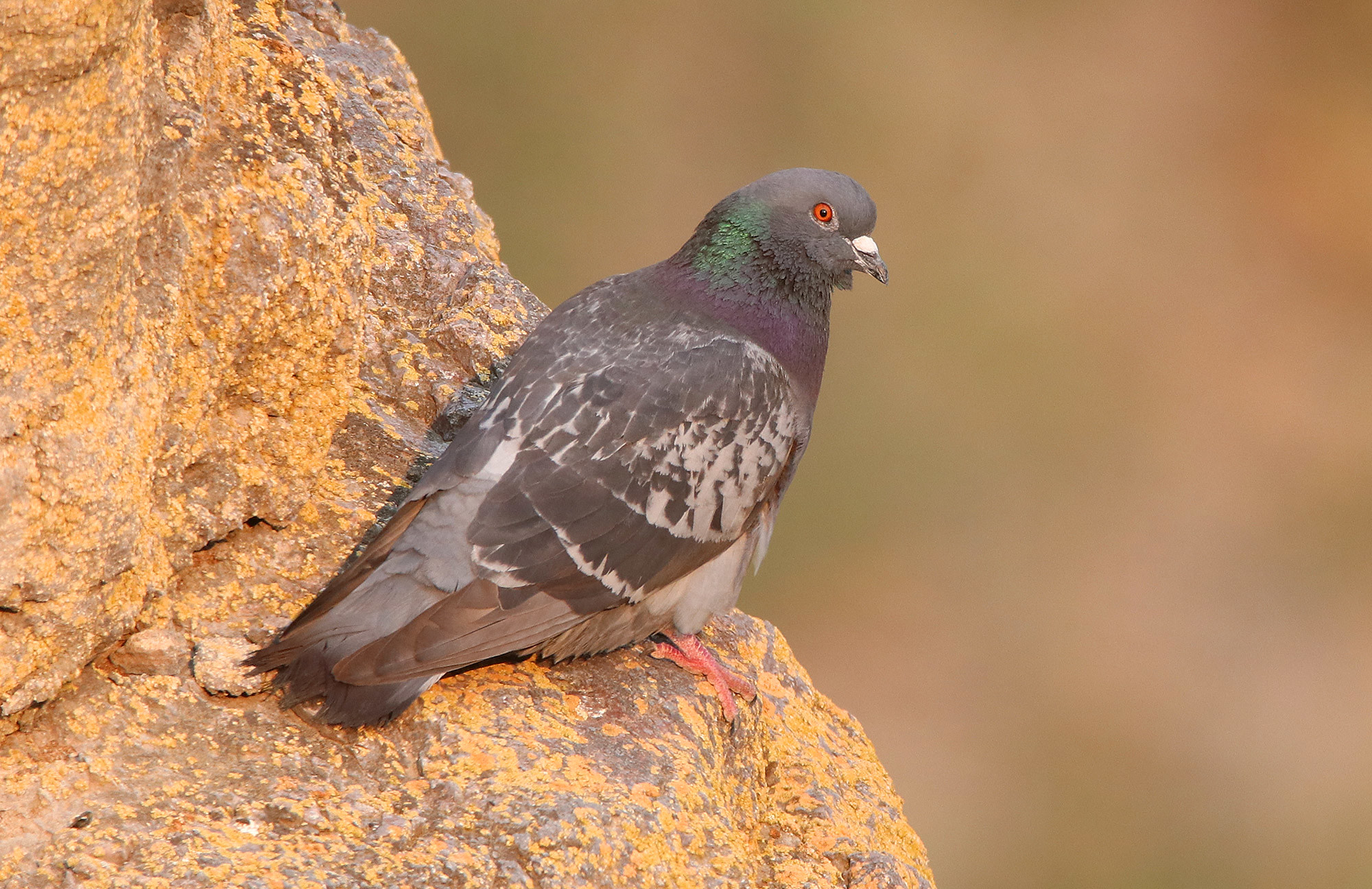 Rock Pigeon
 in some "native" habitat
From Twin Falls it's about a 90-minute drive to the foothills of Boise where we would start our climbing the mountains east of town. A forest fire that started a few days earlier had turned the skies grayish-brown with haze, and the summer heat made for a very warm afternoon. The drive to Aldape Summit only took about 35 minutes, with numerous stops in scrub oak and mixed woodland to try for the vireo. We heard lots of vireos but they were all
Warbling Vireo! We also had lots of nice looks at Lazuli Bunting.
At the area near the summit, we parked and began checking a few spots. It was hot, windy, and not a whole lot was out in the way of birds. We eventually found a few
Western Tanagers and had all but given up hope on the vireo for the day when I decided to try a Blue-headed Vireo scold call on a whim. Much to my surprise, we watched as a
Cassin’s Vireo shot in form across the canyon and landed at eye-level in an enormous pine tree right next to us. The bird quickly realized we weren’t another vireo and went about its business. This was the final continental breeding ABA lifer for John and a successful sweep of the targets for the tour!
 Cassin's Vireo
 deciding it was done with being watched
We had planned on making another try for it the following morning but ran into a small car problem after the vireo. Our loyal van Otus was feeling overworked in the heat and with the steep climb to elevation. The engine overheated and if we hadn’t been facing downhill, I’m not sure how long we would have been there before the van cooled enough to let us coast downhill. Erring on the side of caution we opted not to head back into the mountain the following day. That evening I offered an owling outing, but after a great meal in downtown Boise, we wrapped things up for the night.
On Saturday morning we rose early so we could bird our way back to Salt Lake City. We made the most out of being in Boise and checked out Kathryn Albertson Park along the Boise River Walk. The highlight of a July morning here was
12 Wood Ducks and an early migrant
Orange-crowned Warbler.
 Wood Duck
 in a beautiful scene
It was a beautiful morning to spend walking through the park and even with low overall bird density, we had 25 species in an hour birding.
 Sunrise
 over Kathryn Albertson Park
Starting our journey south we stopped at Indian Creek Reservoir in the middle of nowhere and had a field day with the migrant shorebirds and breeding waterbirds. 9 species of waterfowl including
Blue-winged Teal and
Cinnamon Teal,
Ruddy Duck, and
Northern Pintail were all highlights. Shorebird wise we had
Western Sandpiper,
Long-billed Curlew,
Long-billed Dowitcher,
Wilson’s Phalarope, and several other common species. While the lake here was nearly dried up, the mere presence of water attracted tons of birds, and we had 37 species during our short visit.
Back in Utah, we made a stop at a local wildlife management area just outside of Salt Lake City. As usual, this stop padded our trip list with a number of new species. Highlights included a
Ring-necked Duck that had been present all summer, a migrant
Solitary Sandpiper,
14 Greater Yellowlegs (starting to build up before heading south), several
Sora, a
Virginia Rail,
Neotropic Cormorant, and the usual
Western Grebes and
Clark’s Grebes.
 John and Ellie
 at Kathryn Albertson Park
Despite this being a quick, 3-day tour that mostly focused on Southern Idaho in July, we ended up with 125 species, and most importantly a pair of happy clients that got their targets! I really enjoyed this custom tour and was very pleased with our outcomes!
Photos from this Tour:
Birds Seen on this Tour:
Labels: Cassia Crossbill, Cassin's Vireo, Idaho, private, tours
2021 Lake-Cook Audubon Custom Tour Recap
Posted: September 19, 2021
June 24-28, 2021 - From Salt Lake City, Utah
The last week of June we were delighted to organize a 5-day/4-night custom tour of Utah and Idaho for the
Lake-Cook Audubon Society, based out of Chicago, Illinois. This tour was originally planned for 2020, but postponed until this year due to Covid-19. As our group got vaccinated, and covid-numbers dipped, we gave the green light to run the tour. Unlike our typical itineraries, which limit at 7-8 participants, we worked with the group to bring 14 members, and Jeff Bilsky co-led the tour. The group arrived on June 24th to an unusually cool, windy, and rainy summer afternoon. The weather was a great reprieve from the heat, but had me worried about our first 2 targets…
 Lake-Cook Audubon
 celebrating lifer Cassia Crossbill in the South Hills
As was the default this summer, we took this group to Millcreek Canyon to check out the
9 Tundra Swan that had been present since November. The birds didn’t disappoint, and it made for a nice start with an unusual species for June! The breeders were also out in full force with the cooler temps. We snagged almost every expected species including
Cordilleran Flycatcher,
Swainson’s Thrush,
Lazuli Bunting,
Warbling Vireo,
Dusky Flycatcher, and even a cooperative
Fox Sparrow!
 Cordilleran Flycatcher
 near Salt Lake City
After the nice start, we took a short break for dinner back at the hotel before heading to our nearby waterfall to look for Black Swifts. Unfortunately, the viewpoint was packed with cars and birders so we headed to our secondary viewpoint and did not see a single Black Swift. I have never seen them from the secondary point, so didn’t have high hopes—but perusing eBird the next day I wasn’t too upset, since none of the birders at the other location had any either. We did however get great looks at
Western Tanager.
 Flammulated Owling.
 Our group posing at the end of a long night!
Having waited for swifts, we were a little late in getting to our owling destination for the night. I was nervous as I watched the temps dip into the high 40’s due to the storm front that passed through. The group looked tired and cold as we exited the vehicles. I promised we wouldn’t be out long, and as luck had it was had owls at our first stop—unfortunately, only a few in the group saw the lone cooperative bird before it departed. Heading back to the vehicles I was prepared to make one more stop but decided to quickly try at the cars before we left. This turned out to be the best decision we could have made, as several
Flammulated Owl started responding, and within a minute, a territorial bird came in and landed 20’ away at nearly eye level. The cooperative bird remained long enough for photos by anyone that wanted them and provided some of the best views of this species we had all summer.
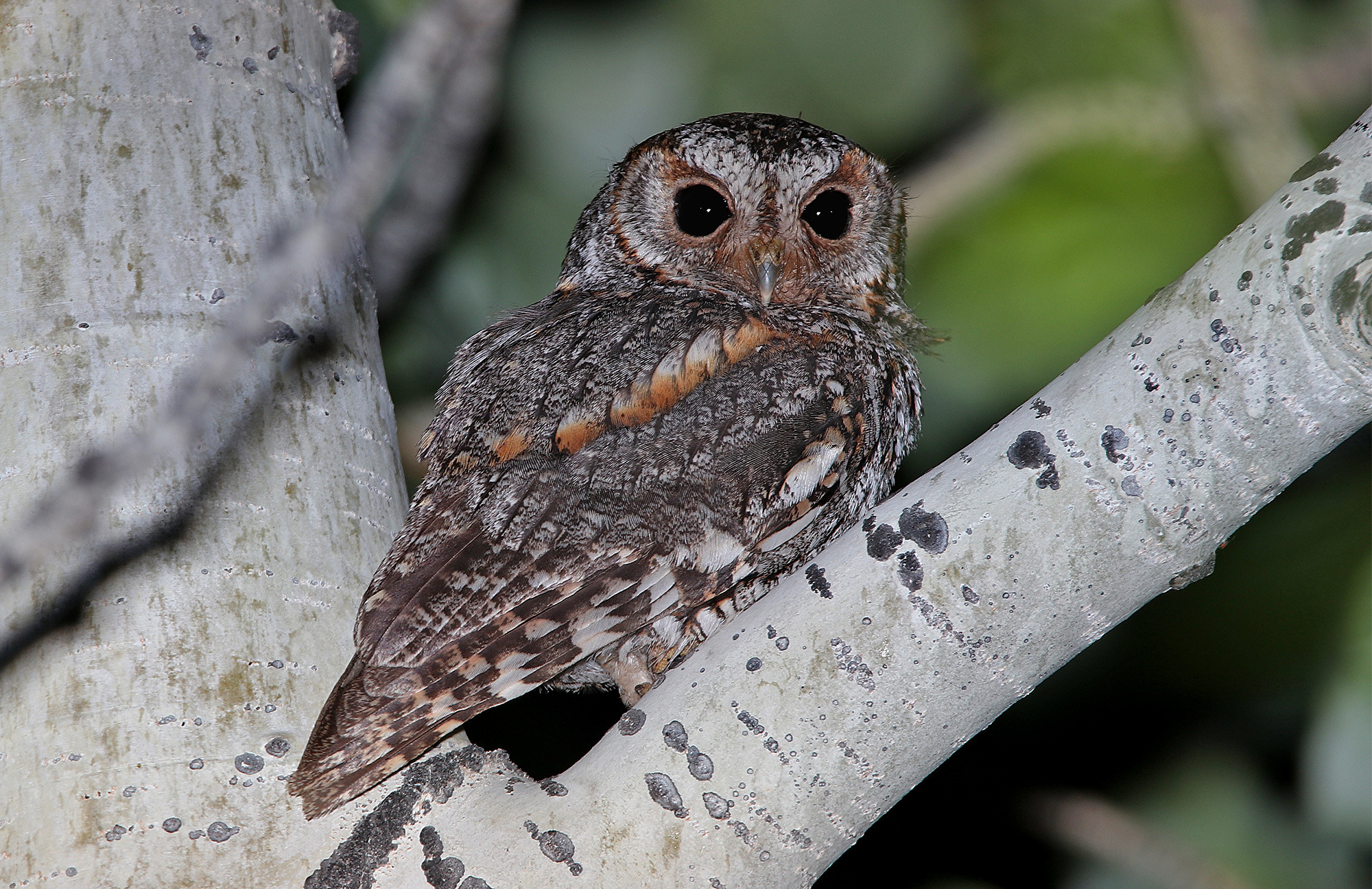 Flammulated Owl
 reward on this cold June night!
After our late night, we got started a little later than usual the following morning, and that was okay. We headed to the juniper woodland and shrub-steppe about an hour from Salt Lake City to see what sage and juniper specialists we could turn up. As usual, our success rate here for the 2 main targets of
Gray Vireo and
Gray Flycatcher remained high with both birds present in decent numbers. We also picked up
Sagebrush Sparrow,
Black-throated Sparrow,
Brewer’s Sparrow,
Juniper Titmouse,
Bushtit, and
Blue-gray Gnatcatcher.
 Sage & Juniper Highlights
 from our morning in the desert
We spent the remainder of the morning birding around the towns of Eagle Mountain and Cedar Fort hoping for some good raptor finds. While we had the expected
Swainson’s Hawks, nothing unusual was to be found. After lunch, we took a much-needed afternoon break. I had received a poor review of the planned afternoon outing from another guide who took a group a few days before and let us know the birding had been very slow. With not many options, and wanting to get our group in the field and to cooler temps, we headed to Alta and the weather was definitely a pleasant departure from the valley heat. While it wasn’t overly birdy, we worked hard and picked up a few montane species, including this gorgeous
Hairy Woodpecker that might have gotten into a sap mess that stained it more brown than usual!
 Hairy Woodpecker
 with an awful lot of color
Trying to avoid a repeat of the night before, we ate dinner a little early and headed to our waterfall viewpoint about 45 minutes early to make sure we got the spot. It paid off! Eventually, we spotted a group of
Black Swift swirling in the distance. I counted what appeared to be 8 birds before we settled on 5 for sure as they moved down the canyon and disappeared. It was a thrilling juxtaposition from the previous day!
With the swifts in the rearview, we turned to another local owl species and took off for a short hike right after sunset. While the birds initially gave us a little heartburn, we finally tracked down one very cooperative
Western Screech-Owl that posed for the group before disappearing back into the woods. Tonight everyone in the group could be in bed by 11 pm!
 Western Screech-Owl
 providing killer looks
We had an ambitious plan for Saturday—and it proved overly ambitious for a group of this size. One thing to always think about when planning any larger group tour is the added need for multiple restroom stops throughout the day, more time when viewing birds to make sure everyone gets scope views of every bird they want to see, and the added loading and unloading times. It had been several years since I did a tour this large, and I definitely didn’t plan for enough time to fit in all our stops as planned.
 Mule Deer
 taken with a cell phone
We kicked off the day about 30-minutes from Salt Lake City at a montane riparian area that is generally very birdy all summer long. This morning was no different. We got right into our targets, getting cooperative
Willow Flycatcher,
Lazuli Bunting,
Belted Kingfisher,
Gray Catbird, and one member of the group spotted a distant
Black-headed Grosbeak which provided great scope views.
Moving on, we visited a mountain valley with a large agricultural area. We quickly found our main targets here of
Bobolink,
Savannah Sparrow,
Wilson’s Snipe, and
Sandhill Crane. A surprise
Wilson’s Phalarope was here—the female bird might have been an early migrant, but could have potentially been a breeder which would be an exciting find here!
 Bobolink
 performing its flight song
Eventually, we made our way up in elevation visiting another montane riparian location with more mature trees and a variety of mixed habitats. In a short 45 minutes here we nabbed our main targets of
American Dipper,
Hammond’s Flycatcher, and
Red-naped Sapsucker.
 Hammond's Flycatcher
 peering down at our group
We also had incredibly cooperative
Cordilleran Flycatcher,
Western Tanager,
Lincoln’s Sparrow,
Fox Sparrow, and all the typical montane species for the height of the breeding season.
 Western Tanager
 belting out a tune
By the time we reached our next stop the day's plans started to unravel. Being a Saturday we anticipated crowds, but it was on the absurd level this morning. But, the campground we planned on birding was quiet as could be for the first time all month. We left adding a few species like
Cassin’s Finch,
Mountain Chickadee,
Dark-eyed Junco, and a flyover
Osprey. But we missed every specific target planned for here, putting a bit of a damper on my expectations.
 Dark-eyed Junco
 at 10,000'
We did make a quick stop at just over 10,000’ for the views and picked up
Rock Wren and
Mountain Bluebird before starting our descent into Wyoming. Needing to make a quick bathroom stop we pulled into a campground on the north slope of the Uinta Mountains that I had never visited before. The 15-minute stop turned into a 53-minute outing, spurred by what appeared to be a Northern Goshawk flying through the trees. The real highlight was finding a pocket of
Wilson’s Warbler that appeared to be breeding here.
 Wilson's Warbler
 we found in the Uinta Mountains
The campground was extremely birdy and we got great looks at a number of species including
Red-naped Sapsucker,
Dusky Flycatcher, and
Cassin’s Finch. We snagged one last surprise before we left as an early migrating male
Rufous Hummingbird flew past while we were gawking at Wilson’s Warblers. From here, we grabbed a late lunch in Evanston, Wyoming, before dropping back into Utah. A short stop near the town of Echo added
Golden Eagle,
Peregrine Falcon, and
Virginia’s Warbler for the tour.
 Peregrine Falcon
 soaring overhead
With a big day to follow we took an afternoon break back at the hotel before grabbing dinner at a distillery nearby. After dinner, an impromptu drive through a local neighborhood added
California Quail and
Lesser Goldfinch for the week!
 California Quail
 in a local neighborhood
On Sunday we rose early and made it to Antelope Island State Park for sunrise. Despite a concerted effort we missed Chukar which has been hit or miss in recent years due to a tough winter 3 years ago. We did however add
Burrowing Owl,
Great Horned Owl,
Northern Mockingbird,
Loggerhead Shrike,
Sage Thrasher, and
Rock Wren before leaving the island. Along the famed Antelope Island Causeway, we got a sneak peek at fall migration, with
50,000 Wilson’s Phalarope swarming, and
10,000 Eared Grebe dotting the water as far as the eye could see.
 Wilson's Phalarope
 on the Great Salt Lake
The plan for the rest of the day was to reach the South Hills of Idaho and see if we could get our 3 main targets there before dark. We made a pit stop at the Juniper Rest Area just over the Idaho border and picked up
6 Juniper Titmouse and a singing
Bewick’s Wren!
 Juniper Titmouse
 up close and personal
Expecting a quick lunch stop we were stunned to arrive at an absolutely slammed rest stop—this delayed our arrival and we didn’t make it into the South Hills until after 1:30 PM. As we drove past the Magic Mountain Ski Area, I heard the familiar call of a
Cassia Crossbill. We pulled in and spent the next hour birding the area and were treated to great scope views at several!
 Cassia Crossbill
 in the South Hills
 Cassia Crossbill
 we found dead in a parking lot
With the crossbill picked up, everything else in the parking area was a bonus. Eventually, we headed towards Brockman’s, but not before a quick stop in an old burn treated us to
3 Lewis’s Woodpeckers. Normally this is the highlight of the drive to the feeders, but a short distance later we found an adult
Ruffed Grouse standing in the road—and her 14 chicks that crossed while we watched!
 Ruffed Grouse
 crossing the road in the South Hills
It was almost 4:30 pm when we arrived at the feeders, and we were treated to the usual show of
Broad-tailed Hummingbird and
Black-chinned Hummingbird. The star of the show as usual here though were
6 Calliope Hummingbirds that made for a great viewing opportunity as birds came in time and time again to specific feeders.
 Calliope Hummingbird
 at Brockman's
Having accomplished our goal for the day we headed out through the desert towards Twin Falls. A late dinner at
Jasmine Thai was a perfect end to the day—capped off with a flyover
Common Nighthawk in the parking lot. Monday started with a visit to the agricultural areas south of town. As with 1/2 our visits to the fields this summer, we missed Gray Partridge—a disappointing change from our success here the previous 5 years. Luckily, the
Northern Harriers,
Swainson’s Hawks, and
Barn Owls put on a show to keep things interesting!
 Barn Owl
 near Twin Falls
We wrapped up our time in Idaho with a visit to Shoshone Falls Park. Overall species density was really low this morning. We didn’t have any wrens which is extremely unusual, and only a single
Yellow-breasted Chat and
Bullock’s Oriole. We had to make some slight adjustments to our end-of-tour plan since several people had their flights moved up by airlines. We ended with a great lunch back in Salt Lake City, and dropped off 1/2 the group for flights. The rest of us headed to a nearby Wildlife Management area and spent the rest of the afternoon checking out
Western Grebe,
Clark’s Grebe,
Greater Yellowlegs,
Neotropic Cormorant,
Blue-winged Teal,
Ruddy Duck, and a variety of other typical marsh birds.
In just 5 short days we tallied 156 species, a surprise with such a large group, but a trend we saw this summer on most of our tours. We had low densities of birds in general, but high species counts overall. The
Lake-Cook Audubon group was a joy to bird with, and Jeff Bilsky did a phenomenal job on his first large multi-day tour!
Photos from this Tour:
Birds Seen on this Tour:
Labels: Black Swift, Cassia Crossbill, Flammulated Owl, Gray Vireo, Idaho, Sagebrush Sparrow, tours, utah
 BACK
BACK
